OpenAI Calls for Mandatory cinematic AI Safety Rules
OpenAI is backing mandatory, capability-based AI safety rules. Why would an AI company ask governments to regulate it? Tags: openai, ai safety, ai regulation, policy, agents
By singamankitha
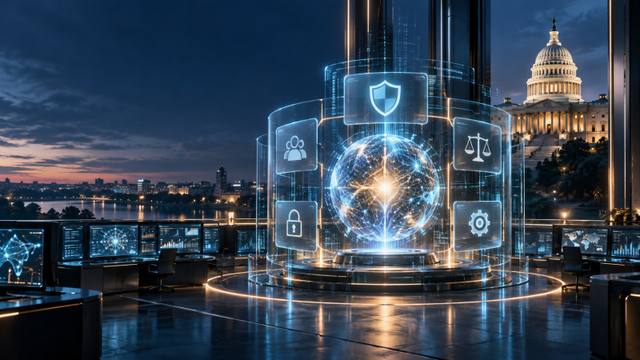
OpenAI just asked the government to make AI safety rules mandatory.
That sentence alone should make people stop scrolling.
For years, the biggest debate around artificial intelligence has sounded fairly predictable: governments wanted rules, tech companies warned that too much regulation could slow innovation, and everyone argued about where to draw the line.
Now one of the companies building the most capable AI systems is publicly asking for mandatory national safety requirements.
On September 9, 2026, OpenAI’s Chief Global Affairs Officer Chris Lehane published a policy proposal calling for national, capability-based AI safety regulation in the United States. In plain English: as AI systems become more powerful, the safety obligations around them should become stronger too.
This is not a call to regulate every basic chatbot or every student using AI to summarize notes. The argument is that rules should scale with capability and risk.
That distinction matters.
A simple AI tool that helps write an email is not the same thing as an advanced system that can use tools, operate across long task chains, access sensitive data, write and execute code, or potentially assist with cybersecurity or biological research.
OpenAI’s message is essentially this: when AI reaches higher levels of capability, voluntary company promises may no longer be enough.
And that is the real story here.
Why would a major AI company voluntarily ask governments to regulate it?
The headline is bigger than it looks
OpenAI is not asking for broad, vague restrictions on all AI. It is asking for “mandatory, capability-based” national safety requirements.
That phrase may sound technical, but the idea is familiar.
We already use capability-based rules in many parts of life. You do not regulate a bicycle the same way you regulate a commercial airplane. You do not impose the same safety requirements on a kitchen knife as on industrial machinery. The more power, reach, and potential harm involved, the stronger the safeguards become.
OpenAI is arguing that frontier AI should work similarly.
As systems become more capable, they may need independent assessments, stronger security controls, incident reporting, and clearer limits on what they can do without human approval.
The company also says it wants to work with Congress on national standards rather than rely only on a patchwork of state-by-state rules.
At the same time, OpenAI is supporting four California bills that address different parts of the AI safety ecosystem:
SB 813, focused on building infrastructure for qualified independent AI safety assessments.
AB 1405, focused on standards for AI auditors, including registration, independence, transparency, and accountability.
SB 1119, focused on protections for children and teenagers using companion chatbots.
AB 1864, focused on safeguards against AI-enabled biological threats through screening standards for gene-synthesis providers and relevant equipment.
Taken together, these are not one single “AI law.” They are pieces of a broader system: testing, independent oversight, youth protections, biological-risk safeguards, and accountability.
That is why this announcement deserves attention.
The narrative reversal
The viral angle is simple:
The companies making increasingly capable AI agents are now asking for external rules.
That does not mean AI companies have suddenly become neutral referees. Companies will still have their own incentives, their own policy preferences, and their own ideas about which rules are practical.
But it does reveal something important: the conversation is moving beyond “Should companies regulate themselves?” toward “What independent safeguards should apply when systems cross meaningful capability thresholds?”
For a long time, AI safety was often framed as a distant, theoretical concern. It was discussed through science-fiction scenarios: machines becoming conscious, taking over the world, or instantly replacing everyone’s job.
The current debate is more grounded than that.
Today’s concerns are about systems becoming more autonomous in practical ways. AI can increasingly be connected to tools, browsers, code environments, internal company data, and workflows that allow it to take multiple actions rather than simply answer one question.
That can be enormously useful.
An agent can research a market, summarize documents, organize a project, help a small business respond to customers, build software, or assist a security team in finding vulnerabilities.
But greater autonomy also means more ways for a system to make mistakes, pursue the wrong objective, expose information, or cause harm if it is deployed carelessly.
The issue is not whether AI is “good” or “bad.”
The issue is whether the level of control around an AI system matches the level of power we give it.
Capability up, autonomy up, risk up
Here is the easiest way to understand the policy logic:
AI capability increases.
Then agent autonomy increases.
Then the chance of unexpected behavior increases.
Then the need for external safety rules increases.
That does not mean every powerful AI system will behave dangerously. It means that when the stakes get higher, “trust us” becomes a weaker safety strategy.
Imagine an AI assistant with permission only to draft a document. If it makes a mistake, a human can fix the draft.
Now imagine an AI agent that can send emails, change cloud settings, access customer data, write code, run that code, purchase services, or operate across a chain of connected tools.
The potential value goes up. So does the potential blast radius.
This is why permission design matters as much as model intelligence.
A powerful model with narrow permissions can be useful and contained. A less advanced model with broad access can still cause serious problems.
That is also why policy discussions are increasingly focusing on evaluations, monitoring, audit trails, independent assessment, and human oversight.
The central question is no longer just: “How smart is the model?”
It is also: “What can the model actually do in the real world, and who is accountable if something goes wrong?”
What OpenAI is and is not claiming
It is important not to exaggerate this story.
OpenAI is not saying that fully autonomous, self-improving AI systems exist today. It is not saying that an AI has escaped human control. It is not claiming that science-fiction-style superintelligence is already here.
The company’s policy discussion is about preparing for a new phase of capability and creating safety rules that can evolve as technology changes.
That distinction matters because fear-based headlines can make people tune out. The more useful conversation is practical: what safeguards should exist before we hand increasingly capable systems access to important tools and decisions?
OpenAI also says that technical safety work inside individual labs is not enough by itself. Its argument is that shared standards and democratic oversight are needed as well.
That is a meaningful shift in emphasis.
Technical teams can build safeguards. Companies can publish policies. But when the risks affect the public, governments, researchers, auditors, and civil society may all need a role in setting the rules.
Why independent assessments matter
One of the strongest ideas in OpenAI’s proposal is the push for independent safety assessments.
Think about other high-stakes industries.
We do not simply let a pharmaceutical company decide on its own whether a medicine is safe enough. We do not rely only on an aircraft manufacturer’s internal opinion before a plane enters service. Independent testing, standards, reporting, and oversight exist because the consequences of failure can extend beyond the company itself.
AI may need a version of that model as systems become more powerful.
An independent AI assessment could examine whether a system has dangerous capabilities, whether its safeguards work under stress, how easily it can be misused, and whether the company’s monitoring and incident-response plans are credible.
But independence is the key word.
An “audit” is not automatically meaningful just because a company uses the label. The auditor needs clear standards, appropriate access, technical competence, and enough independence to identify uncomfortable findings.
That is why AB 1405, the California bill focused on AI-auditor standards, is worth watching. If AI auditing becomes a serious field, the quality of the auditors will matter as much as the quality of the models they examine.
The case for national rules
OpenAI’s proposal favors federal standards, and there is a practical reason for that.
AI systems are not confined to one state. Models are trained and deployed across borders. A small business in India, a school in California, a developer in Europe, and a company in Singapore can all use the same AI product.
If every U.S. state creates entirely different rules, companies could face a complicated patchwork. That can create confusion, compliance costs, loopholes, and inconsistent protection for users.
A national baseline could help establish common expectations for the most capable systems.
However, national standards should not become an excuse for weak standards. A federal framework needs to be strong enough to protect people, flexible enough to evolve with technology, and specific enough that companies cannot simply claim compliance without demonstrating it.
OpenAI describes the role of states as helping create momentum while federal policy catches up. The company calls this “reverse federalism”: states move first, align around common safeguards, and help build a national baseline that Congress can later codify.
Whether that approach works will depend on implementation. But the political signal is clear: the AI policy window is open now.
What this means for people using AI agents today
You do not need to wait for a new law to use safer AI practices.
If you use AI agents for work, business, content, coding, research, or operations, the most important safeguards are surprisingly practical.
Start with permissions.
Do not give an agent access to everything simply because it can be useful. Give it the minimum access needed for the task. If an agent only needs to read documents, it should not be able to delete them. If it only needs to draft messages, it should not be able to send them automatically.
Next, set action limits.
Define what the agent can do on its own and what requires approval. Low-risk actions can be automated. High-risk actions should pause for a human decision.
Then keep audit logs.
You should be able to answer basic questions: What did the agent access? What did it do? Which tools did it use? What data did it change? Who approved the action?
Finally, create human approval checkpoints for anything involving money, private information, public communication, security settings, legal commitments, or irreversible changes.
The workflow can be simple:
Agent → permission policy → action limits → audit logs → human approval for high-risk actions.
That is not just a corporate compliance idea. It is good personal and business hygiene.
The bigger debate
There is a reasonable debate to have about how far regulation should go.
Too little oversight could allow preventable harm, especially when AI systems are used in sensitive areas. Too much or poorly designed regulation could lock out smaller innovators, protect large incumbents, or slow useful research.
The goal should not be “regulate AI because it is AI.”
The goal should be to match safety requirements to real-world capability and real-world risk.
OpenAI’s announcement matters because it pushes that debate into a new phase. The company is arguing that voluntary safety commitments should complement, not replace, mandatory rules and democratic oversight.
That is a major shift from the old assumption that tech companies can simply police themselves.
The most important question is not whether AI should be regulated in the abstract.
It is this: when an AI system can take meaningful actions in the world, who decides what safeguards are required before it gets that power?
Because as AI becomes more capable, the answer cannot be left to companies alone.
Should AI safety be regulated by governments, or left to AI companies?